Overview
Moncarapacho's village square is the quietest place in the Olhão municipality. A café radio, a dog asleep on warm stone, the occasional clatter of a coffee cup set down on a metal table. The coast is only 8km south, but the tourist crowds haven't made it up the hill. The village sits in the low, dry interior behind Olhão, surrounded by carob and fig trees, largely ignored by visitors rushing to the beaches below.
The village has two genuine draws: a parish museum with a strong collection of sacred art and archaeological finds, and the 16th-century parish church overlooking the square. Beyond that, this is a place to experience the inland Algarve at its most unhurried. A coffee in the square, a walk through back streets lined with whitewashed houses, and the honest pace of a community that hasn't been reshaped by tourism. An hour or two covers Moncarapacho comfortably. It pairs well with a morning at the coast in Fuseta or a day exploring the eastern Algarve interior.
Museu Paroquial
The parish museum, housed in historic buildings beside the church, is the main reason to stop. The collection spans sacred art (painted panels, liturgical silverware, wooden polychrome figures) alongside archaeological material from the surrounding countryside, including Roman-era fragments and Moorish ceramics. For a village museum, the range is unusual; most settlements this size don't bother with more than a locked display case.
The museum is small enough to see in 30 minutes. Ask at the church or the nearby café if the door is closed — opening hours are informal and sometimes depend on whoever holds the key.
The square and the church
Moncarapacho's centre is the Largo da Igreja, a compact square dominated by the Igreja Matriz. The church dates from the 16th century, with later modifications that added a Baroque altar and azulejo panels to the interior. The exterior is plain white limestone, typical of the eastern Algarve, but the proportions are handsome and the setting under the square's mature trees is restful.
Around the square, a handful of cafés and a pastelaria serve coffee and simple lunches. The food is local and unpretentious: grilled chicken, pork with clams (carne de porco à alentejana), whatever the kitchen is making that day. Prices are noticeably lower than anything on the coast. This is where village residents eat, and the menu reflects it.
Getting there
From Olhão: Moncarapacho is 8km north of the town centre, about 15 minutes by car. Follow the signs from the EN125; the road climbs gently through open countryside.
By car from Faro: 18km east, roughly 25 minutes via the A22 or 30 minutes on the EN125 through Olhão.
Parking: Free and easy. Spaces around the main square rarely fill, even in summer.
Note: A car is essential. There is limited bus service from Olhão, but schedules are infrequent and impractical for a short visit.
Practical information
Most visitors spend an hour or two in Moncarapacho: the museum and the church, a coffee or lunch in the square, and a walk through the back streets. It works best as a stop on a day that includes other destinations rather than a trip in its own right.
For a coastal contrast, combine with Fuseta (15 minutes south), where the harbour and island beach offer a completely different pace. History enthusiasts heading for Estoi and its Roman ruins (20 minutes west) can route through Moncarapacho on the way.
Accommodation is limited to a few guesthouses and rural properties in the surrounding hills. For more options, Olhão is the nearest base.
Where to stay
-
Casa Modesta architecture and design lovers Booking.com
-
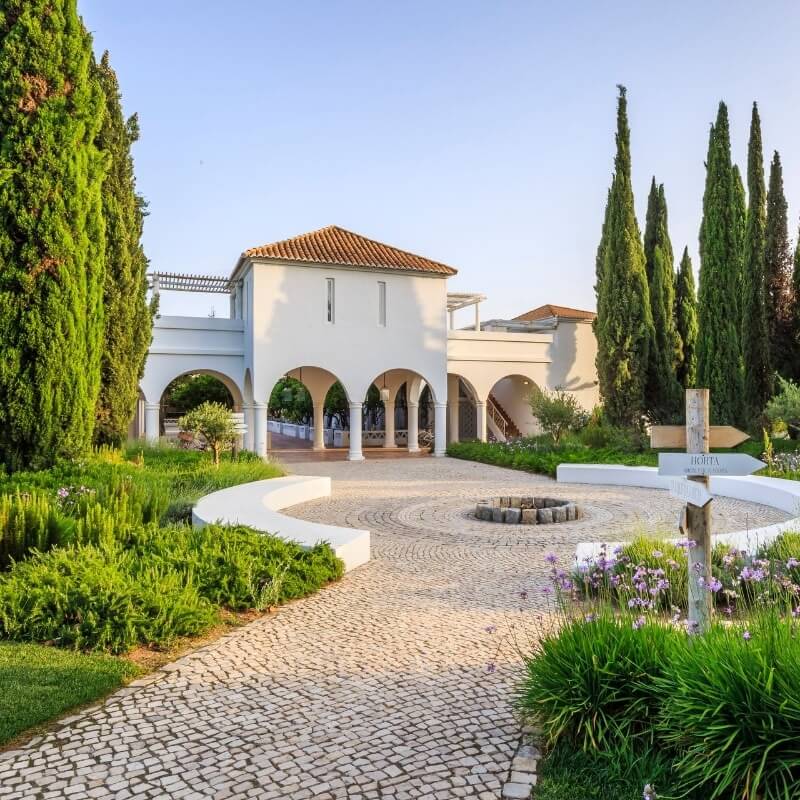 Octant Vila Monte couples and families wanting a luxury rural base Booking.com Expedia
Last reviewed: