Overview
Luz de Tavira sits 6km southwest of Tavira on the edge of the Ria Formosa, where the agricultural barrocal gives way to the salt marshes and lagoon channels of the natural park. The parish has around 3,400 residents and a history that runs deeper than most: Romans built here, the church blends Manueline and Renaissance architecture, and an Islamic-era watchtower still stands on the coast. For most visitors, though, Luz de Tavira means one thing — the road to Praia do Barril via Pedras d'el Rei.
The village deserves more than a drive-through. The church alone justifies a stop, and the Roman site adds genuine archaeological interest to a parish that most people treat as a car park on the way to the beach.
The church
The Igreja de Nossa Senhora da Luz, classified as a Monument of Public Interest (2013), is one of the eastern Algarve's more complex parish churches. The Mannerist facade gives a formal first impression, but the side portal is older and more interesting — Manueline stonework with intricately carved capitals decorated with grapevines and grape clusters. Inside, three naves covered with vaults lead to a Mannerist altarpiece from the 16th century. The church survived the 1755 earthquake better than most, and the rossio (public square) in front of it is classified alongside the building.
Roman archaeological site
The Estação Arqueológica Romana da Luz, classified as a Property of Public Interest since 1992, sits within the parish boundaries. The site preserves remains of a Roman settlement — part of the network of villas, farms, and fish-processing operations that lined the Algarve coast during the Roman period. The ruins are modest in scale but genuine, and the classification reflects their archaeological significance for understanding Roman occupation in the eastern Algarve.
Torre de Aires
On the coast near Luz de Tavira, the Torre de Aires is an Islamic-era watchtower — the sole survivor of several coastal towers that guarded the Ria Formosa shoreline before the 1755 earthquake destroyed the rest. The tower is a quiet, often-overlooked monument standing at the edge of the lagoon, and reaching it involves a walk through salt marsh habitat where you're likely to see herons, flamingos, and other wading birds.
Praia do Barril and Pedras d'el Rei
Most visitors pass through Luz de Tavira to reach Pedras d'el Rei, the resort complex and car park from which a mini-train and footpath cross the Ria Formosa to Praia do Barril on the barrier island. The beach is famous for its anchor cemetery — rows of old tuna-fishing anchors embedded in the sand — and for the long, uncrowded stretches of golden sand that extend in both directions.
Exit the EN125 near Luz de Tavira, follow signs to Santa Luzia and Pedras d'el Rei. The car park charges around €8 for a full day in summer; many locals park for free along the roadside just before the entrance.
Getting there
By car: From Tavira, head southwest on the EN125 — roughly 6km, about 10 minutes. From Faro, 20km east (20 minutes via the A22).
By train: Luz de Tavira has a station on the Algarve railway line. Trains from Faro take about 25 minutes.
By bus: Vamus Algarve buses connect Luz de Tavira with Tavira and Faro.
Practical information
Luz de Tavira works as a morning stop on the way to or from the beach. See the church (ask locally about mass times), drive past the Roman site if it's accessible, and continue to Pedras d'el Rei for Praia do Barril. For lunch, Santa Luzia — the octopus capital — is five minutes west and has the best waterfront restaurants in the eastern Algarve.
The village has cafés and a couple of restaurants, but Santa Luzia and Tavira are the dining draws nearby. For a full eastern Algarve day, Cabanas de Tavira offers another Ria Formosa beach crossing, and Cacela Velha adds a clifftop fortress view further east.
Where to stay
Pedras d'el Rei resort complex nearby; otherwise base yourself in Tavira (6km) or Santa Luzia.
-
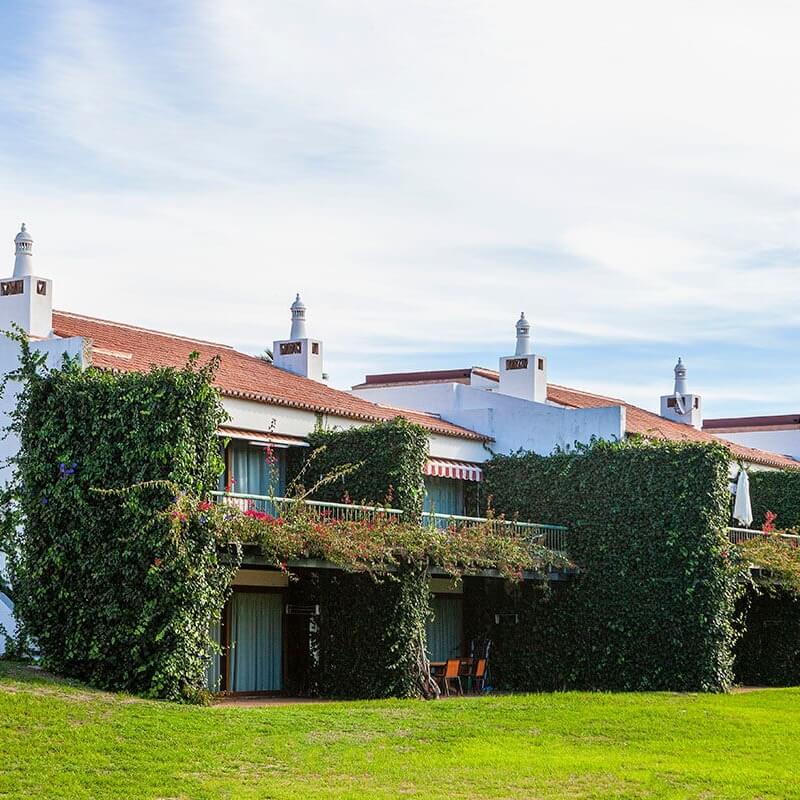 Pedras d'el Rei couples wanting Ria Formosa tranquillity Booking.com Expedia
Last reviewed: