Accommodation Character
Vila Real de Santo António's accommodation scene runs on value, not prestige. Monte Gordo is the main draw: a beach resort that caters overwhelmingly to Portuguese and Spanish families, with prices that undercut equivalent properties in Albufeira or Lagos by a wide margin. The historic border town itself offers a handful of characterful alternatives for visitors who prefer a real town over a resort strip.
Don't come here expecting boutique hotels or design-led properties. The accommodation stock is functional, sometimes dated, and firmly mid-range at best. That's not a criticism; it reflects the market. Visitors here spend their money on long beach days and cheap seafood, not on the hotel. If you want the eastern Algarve's elegance, Tavira is 25km west and a different proposition entirely.
The seasonal swing is sharp. July and August bring a wave of Portuguese holidaymakers. Monte Gordo fills up, prices rise (though they still look modest compared to the central Algarve), and restaurant queues appear. Outside those two months, the municipality is remarkably quiet. Off-season rates drop significantly, and some of the smaller properties close altogether between November and March.
Where to Base Yourself
Monte Gordo is where most visitors stay. The long, wide beach faces south, catches the morning sun early, and has some of the warmest water in the Algarve. Hotels and apartment blocks line the beachfront promenade, and in summer the whole strip operates at a steady, unpretentious rhythm — beach by day, seafood restaurants by night.
The trade-off is character. Monte Gordo's built environment dates mostly from the 1970s and 80s, and it shows. The architecture is generic resort-town concrete, the restaurant scene is reliable but unexciting, and once you've walked the promenade, there's little else to explore on foot. Evening entertainment is limited to a few bars and the Casino de Monte Gordo. For visitors whose holiday centres on the beach itself, this won't matter. For those wanting a sense of place, it might.
Vila Real de Santo António town sits on the Guadiana river, 4km west of Monte Gordo. The Marquês de Pombal rebuilt it from scratch after the 1755 earthquake, and the result — a geometric grid of wide streets and a central square modelled on Lisbon's Praça do Comércio — gives it a dignity that Monte Gordo lacks. Restaurants here serve locals, not tourists, and the ferry to Ayamonte in Spain takes 15 minutes from the riverfront.
The drawback is beach access. Praia de Santo António is a short drive or bus ride away, and parking at Monte Gordo's beach fills early in August. If a walk-to-the-beach holiday is the priority, stay in Monte Gordo. If you want an actual town to come back to in the evenings, VRSA is the better base.
Cacela Velha and the Vila Nova de Cacela area sit at the municipality's western edge. Praia de Cacela Velha is a barrier island beach reached by small boats from the lagoon, genuinely spectacular and far quieter than Monte Gordo. But accommodation here is almost non-existent; a handful of rural properties and holiday rentals are the only options. Treat it as a day-trip destination from Monte Gordo or VRSA, not a base.
Featured Hotels
Monte Gordo Hotel Apartamentos
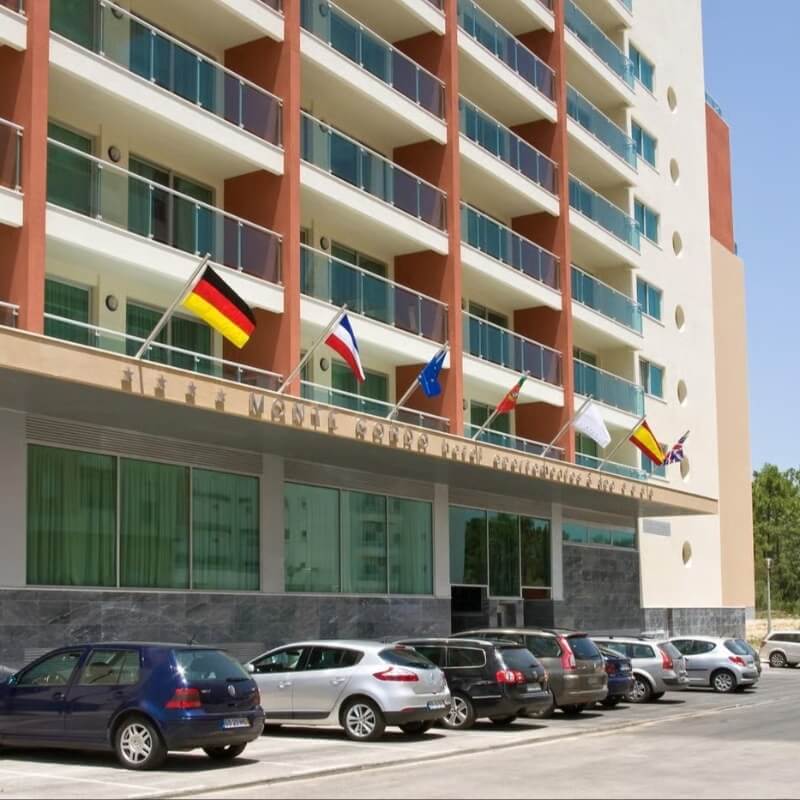
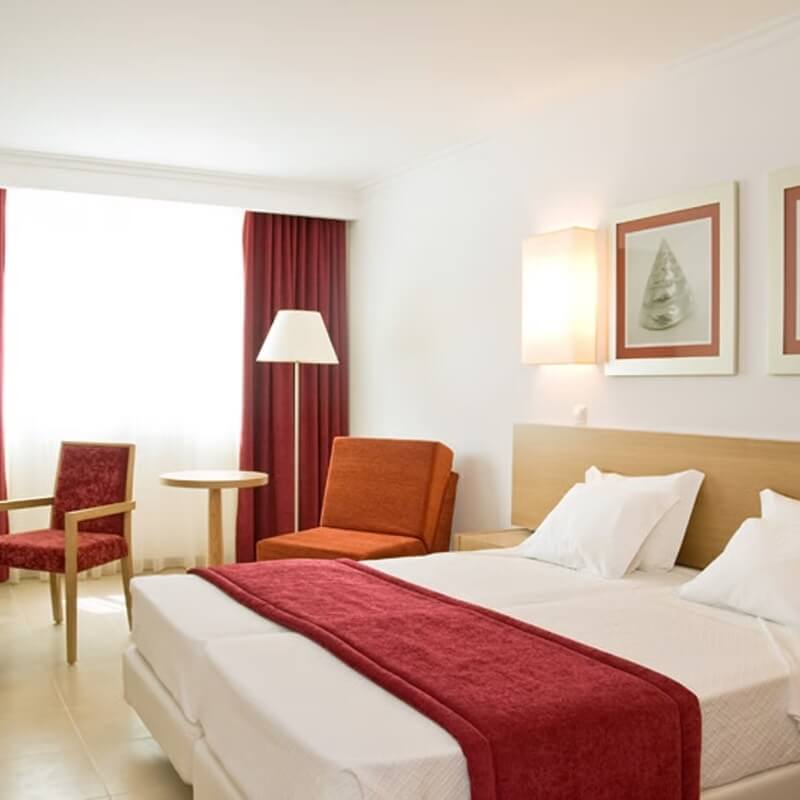
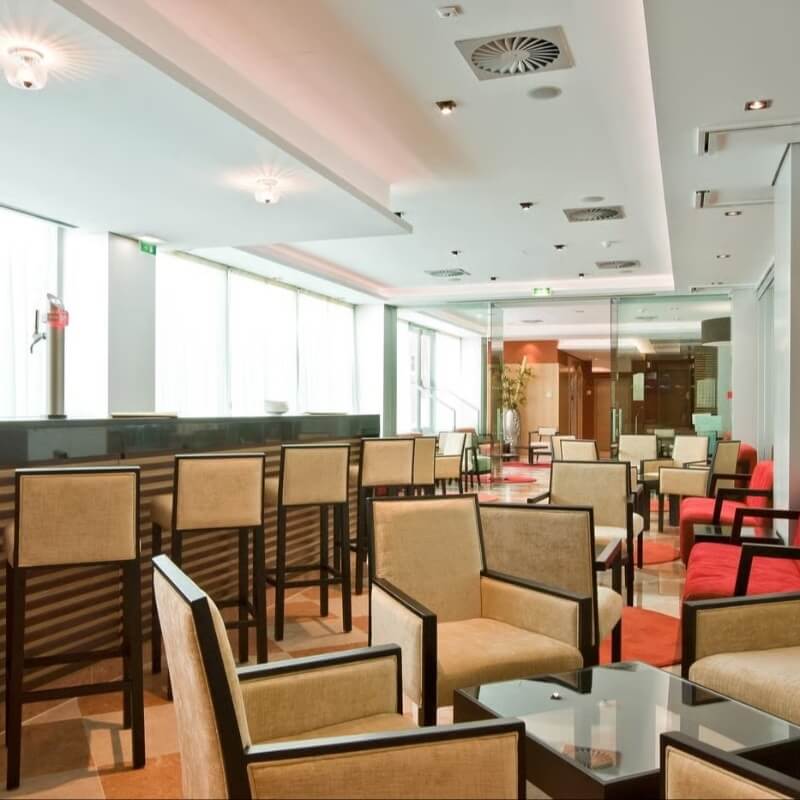
The straightforward beach option. Apartment-style units with kitchenettes suit families and longer stays well; you can stock up at the Monte Gordo supermarkets and avoid eating out every night. The location, steps from the sand, is the main selling point; the building itself is typical of Monte Gordo's 1980s resort architecture, functional but showing its age despite periodic updates. There are pools, a restaurant, and the basics, but nobody comes here for the hotel. They come for the wide beach and the price — rates in shoulder season are genuinely cheap by Algarve standards. Expect honest accommodation, not inspiration.
Best for: families on a beach-holiday budget, longer self-catering stays, those treating the hotel as a base
Check this stay at Booking.com Expedia
Website · Map
Vasco da Gama Hotel
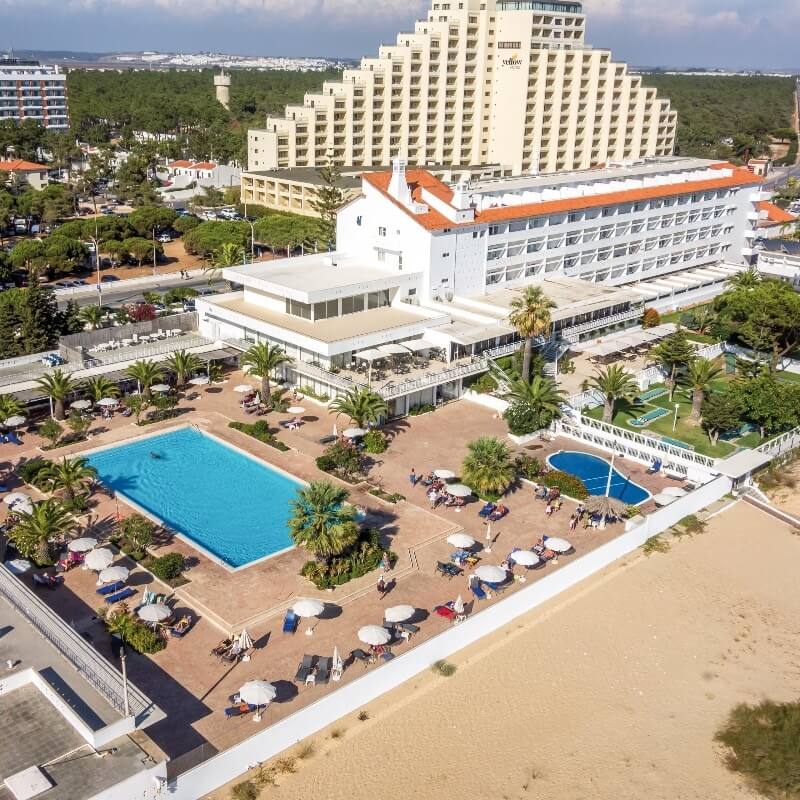
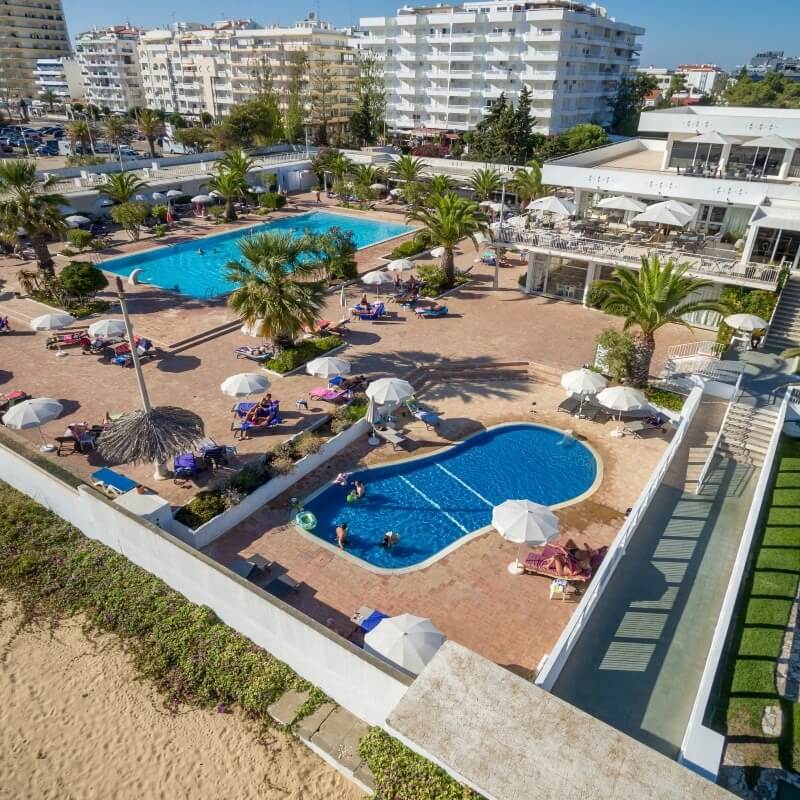
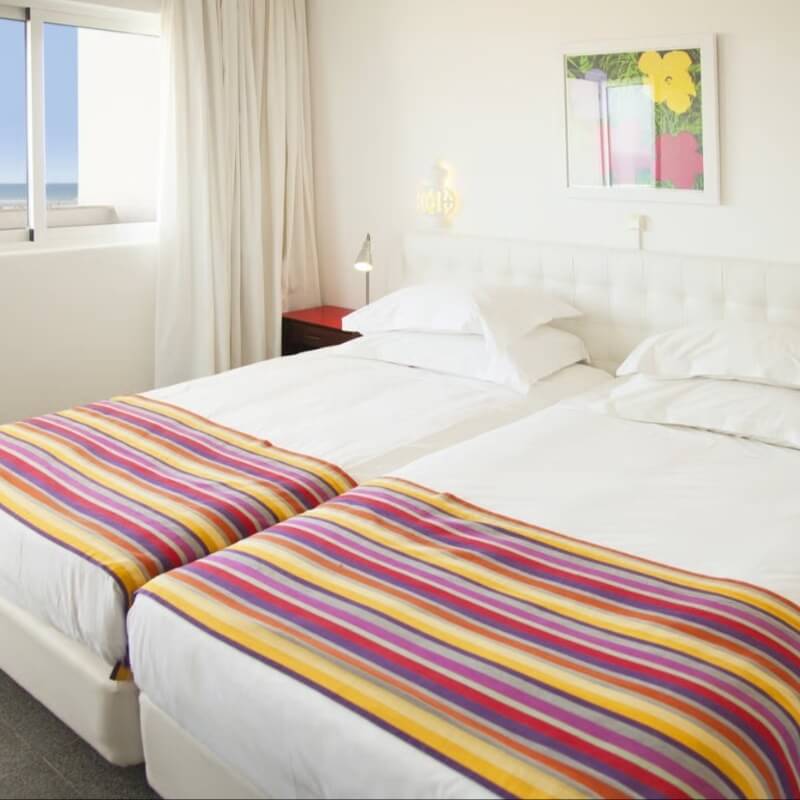
The alternative for visitors who'd rather stay in a real town than a resort strip. Set in Vila Real de Santo António's Pombaline grid, this hotel puts you within walking distance of the riverside promenade, local restaurants that serve Portuguese families rather than tourists, and the ferry terminal for Ayamonte in Spain. The rooms are clean and adequate without being memorable — functional furniture, decent beds, reliable wifi. The appeal is the surroundings, not the property itself. You'll need to drive to beaches, but the 4km to Monte Gordo takes 10 minutes and parking is free outside peak August. A sensible urban base at fair prices.
Best for: independent travellers, those combining Portugal and Spain, visitors preferring town atmosphere to resort strips
Check this stay at Booking.com Expedia
Website · Map
Pousada de Vila Real de Santo António
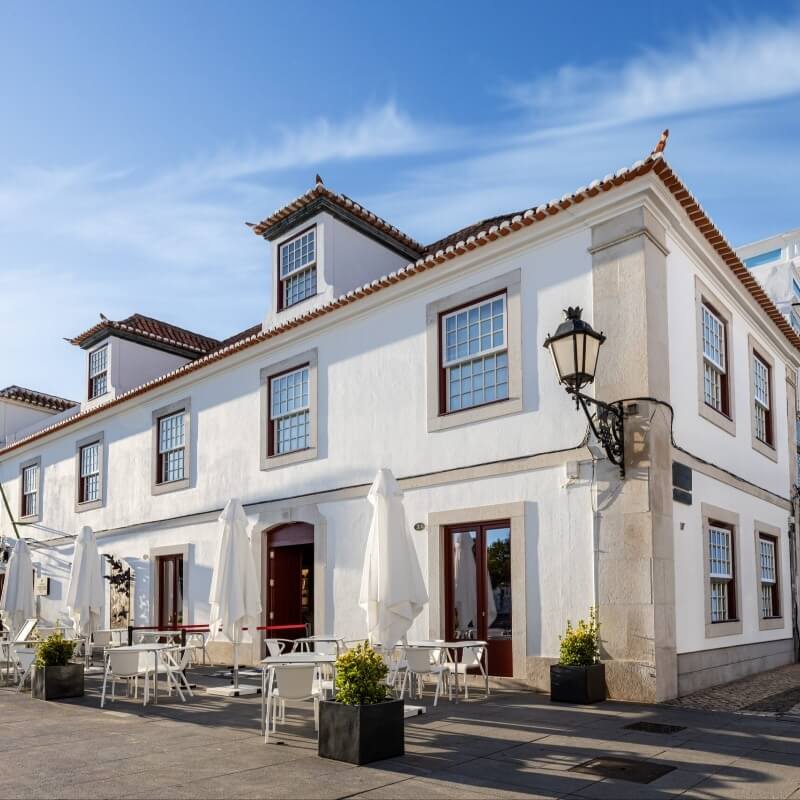
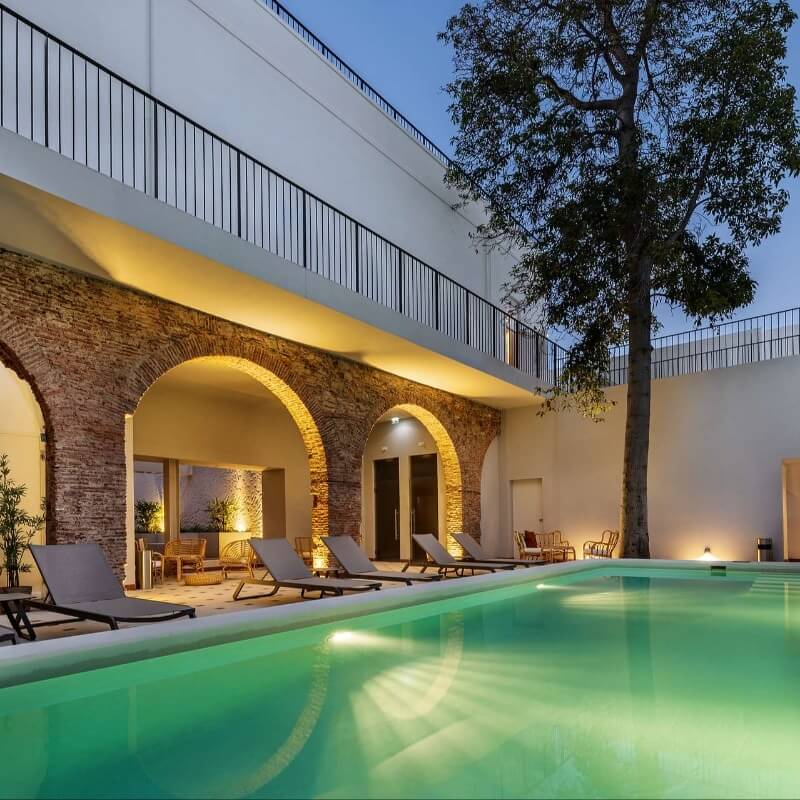
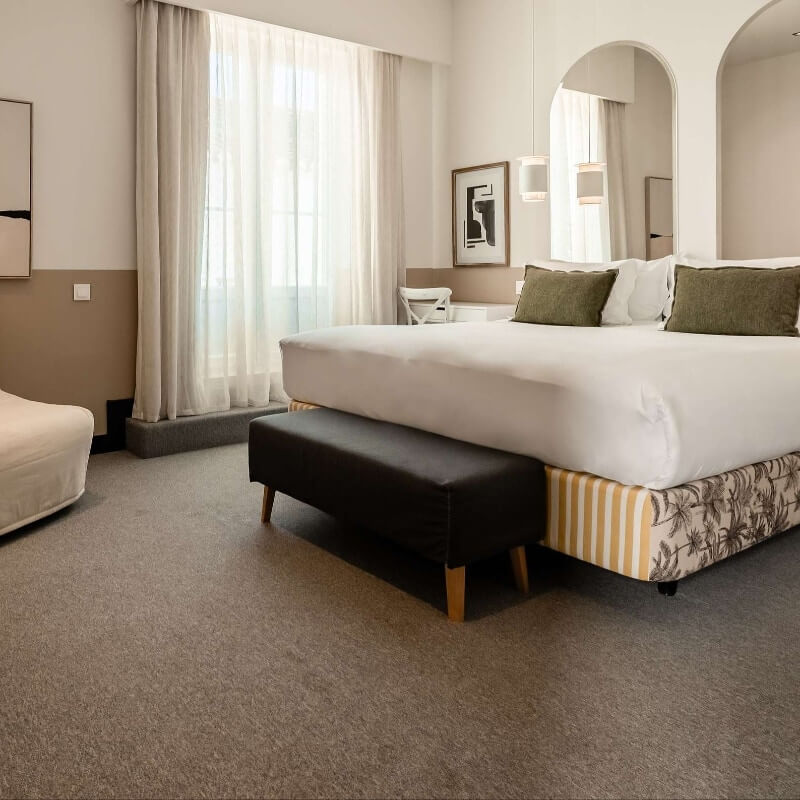
A modern Pousada on Vila Real de Santo António's central square, blending contemporary design with the town's geometric Pombaline architecture. Rooftop pool, clean-lined rooms, and the Pousadas de Portugal brand quality provide reliable standards. The location on the main square is central to the town's grid, with the riverside promenade and Spanish ferry a short walk. The property works well as an overnight stop for visitors crossing to or from Spain, or as a base for exploring the eastern Algarve's quieter coast. At €€€, pricing is fair for the quality. The town itself is authentic rather than touristic, which either appeals or disappoints depending on expectations.
Best for: heritage enthusiasts, those wanting central Pombaline-grid positioning, visitors combining Portugal and Spain
Check this stay at Booking.com Expedia
Website · Map
Bordoy Grand House
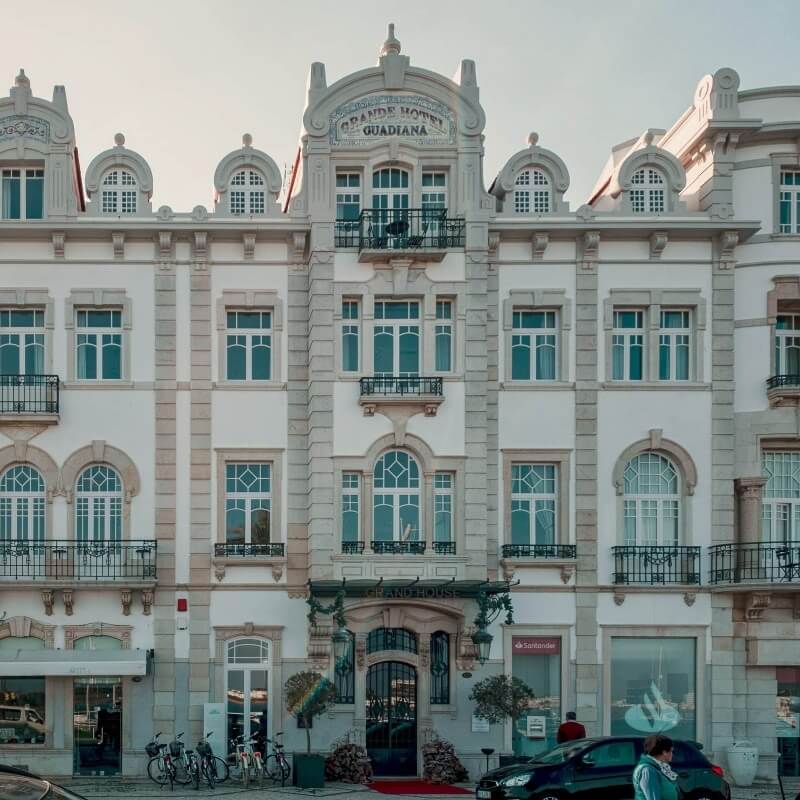
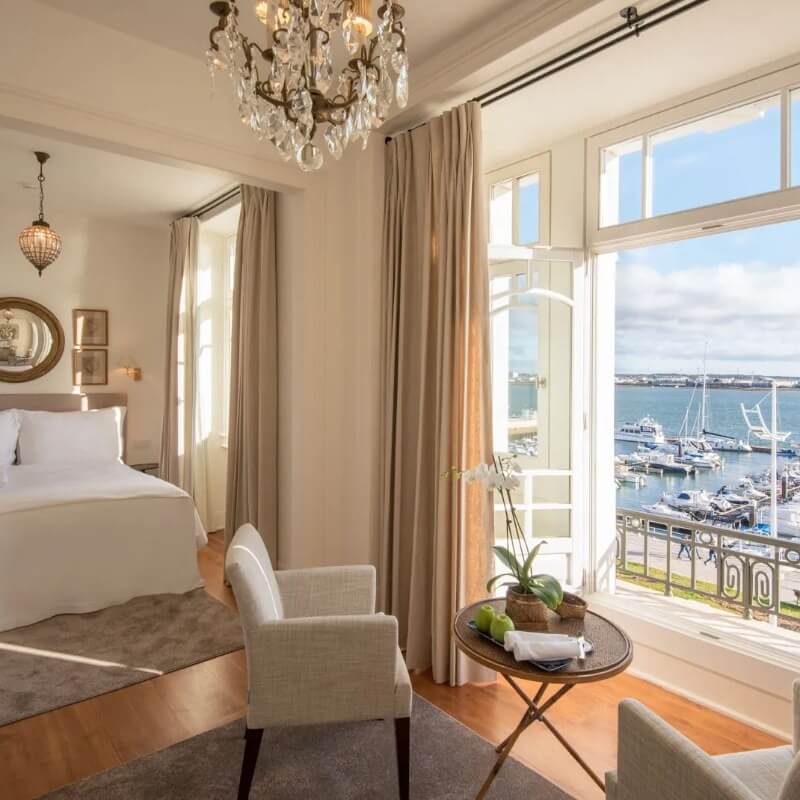
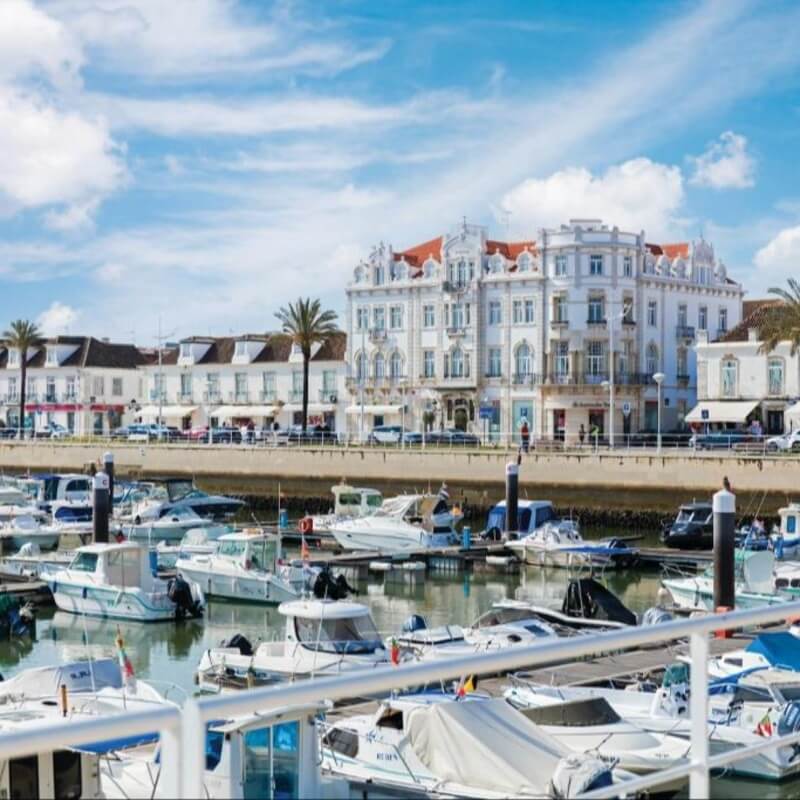
A luxury hotel in Vila Real de Santo António's Pombaline grid that brings five-star quality to the Algarve's least touristed coastal town. The building's conversion preserves the 18th-century façade while creating contemporary interiors, a restaurant, and the kind of service standards that the eastern Algarve has historically lacked. The Pombaline grid location puts you within walking distance of the riverside promenade and the ferry to Ayamonte in Spain. At €€€€, it's a statement property in a town where most accommodation is basic, and whether the premium justifies itself depends on how much you value luxury in an authentic setting over luxury in a resort one.
Best for: luxury seekers in the eastern Algarve, couples wanting Relais & Châteaux standards, those drawn to the Pombaline grid setting
Check this stay at Booking.com Expedia
Website · Map
The Prime Energize
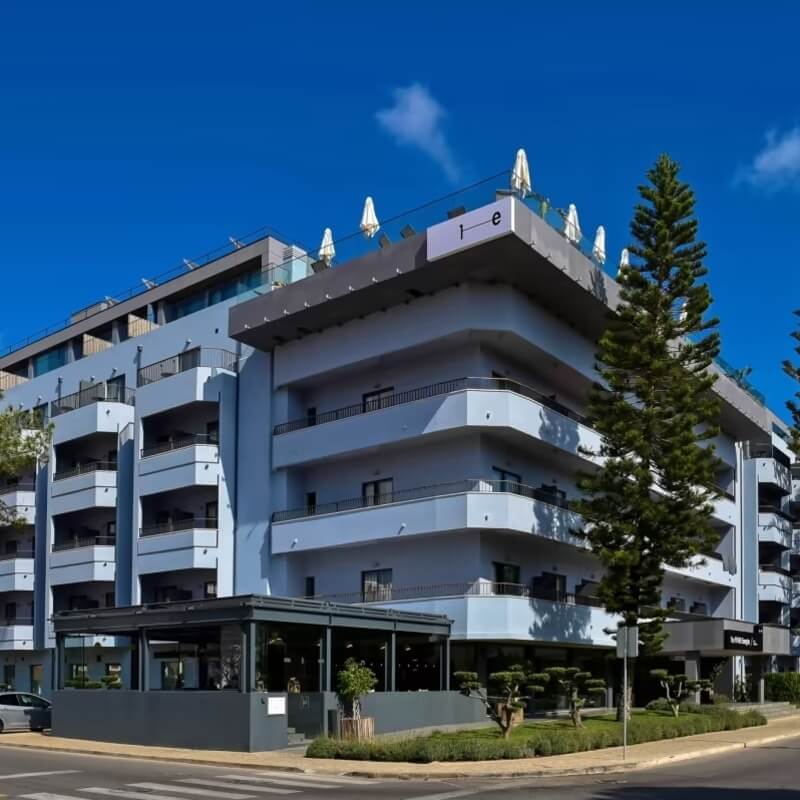
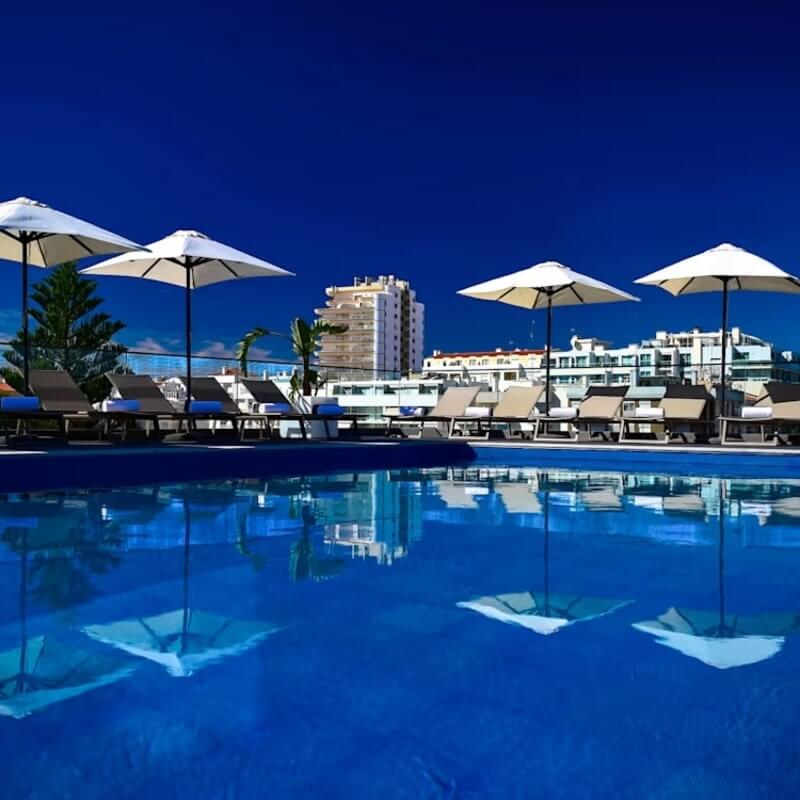
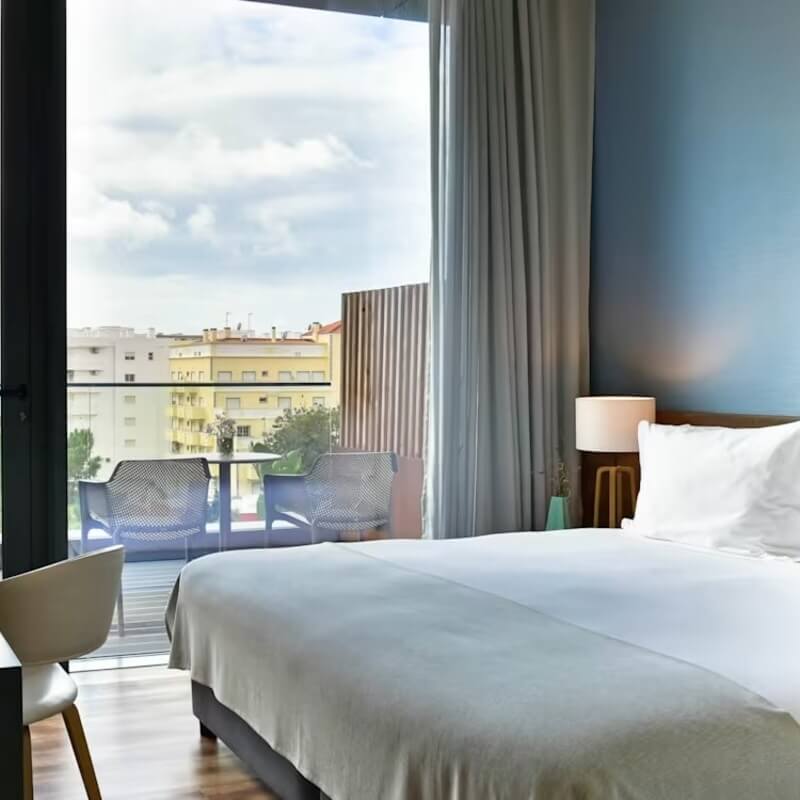
A four-star hotel near Monte Gordo beach targeting active and fitness-focused travellers. The rooftop facilities — pool, gym, terrace — set it apart from the area's older resort stock, and the overall design is more contemporary than most Monte Gordo properties. Rooms are modern and well-equipped, and the fitness focus extends to wellness programmes and a sports-oriented approach. The beach is 400 metres away, and Monte Gordo's long stretch of sand suits families and swimmers. At €€€, it represents a step up from the budget beach hotels without reaching luxury pricing. For visitors who want a modern property near Monte Gordo's beach, it fills a gap.
Best for: active travellers wanting rooftop facilities, those wanting Monte Gordo beach proximity, fitness-focused visitors
Check this stay at Booking.com Expedia
Website · Map
Villa Marquez
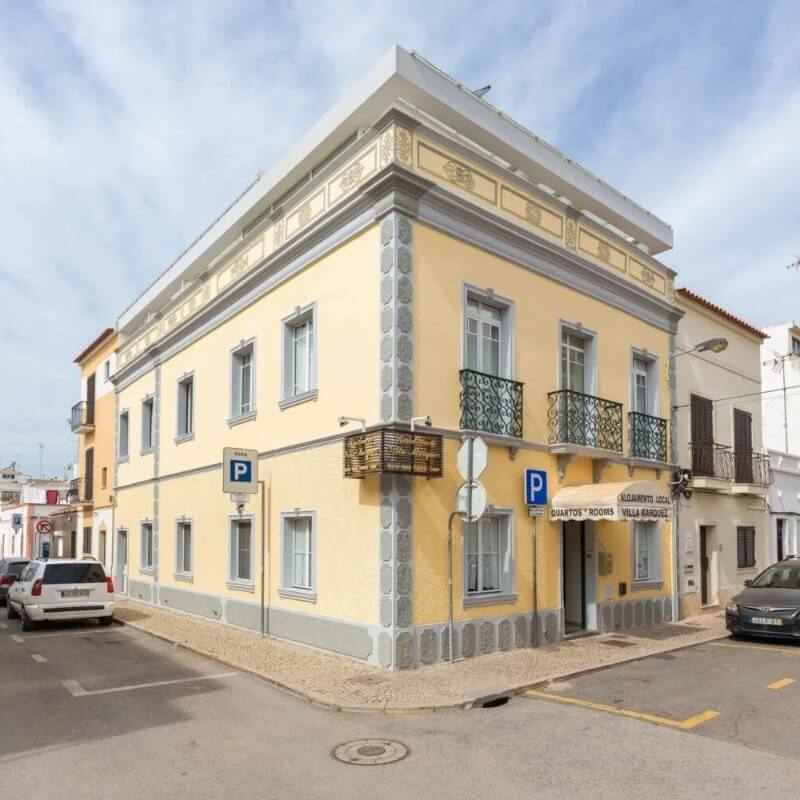
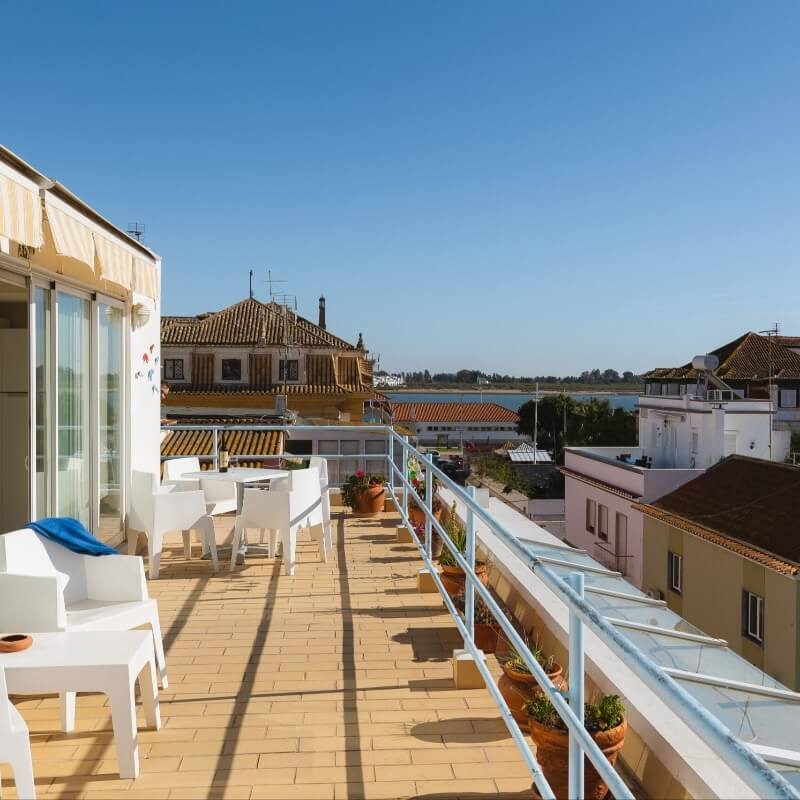
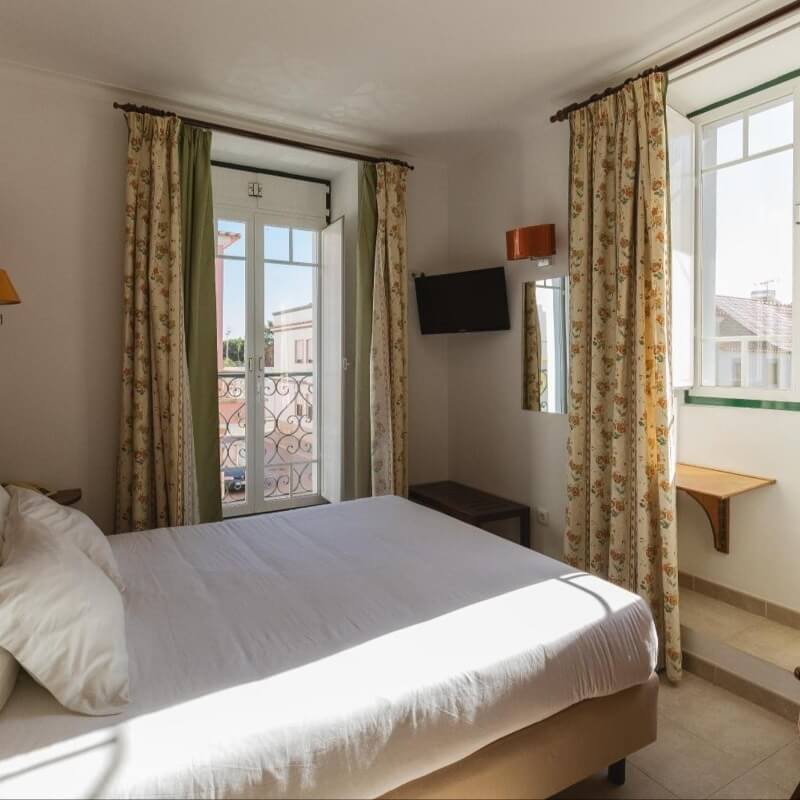
A bright two-bedroom apartment in Vila Real de Santo António's Pombaline grid, close to the Guadiana River. The space is generous and well-equipped, and the location puts the bus terminal, shops, and the ferry to Spain within walking distance. The trade-off is geography: VRSA is a river town, not a beach town. The nearest ocean beach requires a drive or a long walk through pine forest. The grid layout also feels more urban than the typical Algarve village. At € pricing, it's a fraction of what you'd pay on the coast — good value for budget visitors, small families, or remote workers wanting quiet and transport links.
Best for: budget holidaymakers wanting a town base, small families needing space at low cost, digital nomads wanting quiet and good transport links
Check this stay at Booking.com Expedia
Website · Map
What to Expect
Accommodation here is straightforward. Hotels and aparthotels make up most of the stock: no boutique conversions, no design hotels, and no heritage properties of the kind you'll find in Tavira or Faro. What you get is clean, functional rooms at prices that feel like a throwback to a cheaper era of Algarve tourism. Most properties cater to repeat visitors, predominantly Portuguese and Spanish families who return year after year.
A car is useful but not essential if you stay in Monte Gordo. The beach, restaurants, and supermarkets are walkable. Staying in VRSA town makes a car more important for beach trips, though local buses connect the two. Parking is generally easy outside of August, when beach-adjacent spots fill by mid-morning.
The Spanish border adds a practical dimension that other Algarve municipalities lack. The Guadiana ferry to Ayamonte runs frequently, takes 15 minutes, and costs a few euros. Ayamonte has a different restaurant scene, a different pace, and its own beaches. Some visitors split their time between the two. It's the kind of cross-border flexibility that makes this corner of the Algarve distinct.
Booking Considerations
- Peak summer (Jul–Aug): Book 2–3 months ahead for Monte Gordo beachfront properties. VRSA town hotels have more availability even in August.
- Off-season value: Rates drop substantially Oct–May. Some smaller properties close Nov–Mar, but the main hotels stay open and offer genuine bargains.
- Car or no car: Monte Gordo works without a car if the beach is your focus. For VRSA town, Cacela Velha day trips, or exploring the eastern Algarve, a car makes a real difference.
- Parking: Free and easy outside August. In peak summer, beachfront spots in Monte Gordo fill by 10am; the town car parks further back always have space.
- Day trips from here: Tavira is 25km west and worth a full day. Castro Marim castle and salt pans are 10 minutes north. Ayamonte in Spain is a 15-minute ferry ride.
- Language: Expect more Portuguese than English in restaurants and shops. Basic Portuguese goes further here than in the tourist-heavy central Algarve.
- Booking platforms vs direct: Most properties here are listed on major booking platforms. Direct booking occasionally yields better rates at apartment-style properties, but the difference is small.
- Water temperature: The warmest swimming water in the Algarve, consistently several degrees above the west coast. A genuine draw for families with young children.
Last reviewed: