Overview
Odiáxere is the kind of place you end up at because someone who lives here told you to eat here. The small village sits inland between Lagos and Portimão, a few kilometres off the EN125, and the coast is 10 minutes in either direction. But nobody comes to Odiáxere for the coast. They come for the family-run restaurants that serve grilled fish and cataplana at prices the seafront gave up on years ago, and for the fact that nobody is trying to sell them anything.
The village square has a parish church, a couple of cafés, and the low hum of a community that runs on farming and local trade rather than tourism. South of the village, the Ria de Alvor lagoon stretches toward the dunes. It's walkable, and worth the detour if you have time after lunch. Odiáxere is a lunch destination, not an overnight one. Give it an hour or two.
Where the locals eat
The restaurants are the reason to come. Several family-run places along and near the main road serve traditional Algarvian cooking: whole grilled dourada (sea bream), frango no churrasco (piri-piri chicken), cataplana of fish or shellfish, and hearty meat dishes like carne de porco à alentejana (pork with clams). The portions are generous and the prices run roughly €8–14 for a main, noticeably cheaper than anything with a sea view.
House wine arrives in ceramic jugs, unlabelled and local. The bread and olives come without asking. Lunch here is unhurried, and the clientele is largely Portuguese: families from Lagos, workers from the surrounding farms, the occasional informed tourist. On weekends, the better-known places fill by 1pm, so arriving early helps. This isn't fine dining; it's home cooking served in simple dining rooms, and it's exactly what it should be.
The Ria de Alvor
South of the village, the landscape opens into the Ria de Alvor, a tidal estuary where the Alvor river spreads into salt marshes, mudflats, and shallow channels before reaching the Atlantic. The lagoon is shared with Alvor, whose boardwalk trails approach from the west, but the northern edge nearest Odiáxere is quieter and less visited.
Footpaths and dirt tracks lead from the village toward the lagoon's northern fringes, where wading birds feed at low tide. Flamingos visit between autumn and spring, and spoonbills, herons, and egrets are present year-round. The walking is flat and easy, though the paths are unpaved and can be muddy after rain. Allow 30–45 minutes each way from the village to reach the lagoon edge. Bring binoculars if you have them.
Getting there
From Lagos: Odiáxere is 7km east of Lagos centre, about 10 minutes by car. Follow the EN125 toward Portimão. The village is signposted to the north of the road.
From Faro: 85km via the A22 motorway, roughly an hour. Take the Lagos/Odiáxere exit.
A car is essential. Vamus Algarve bus services pass through on the Lagos–Portimão route, but frequency is low and geared toward commuters. The village has easy parking.
Practical information
Most visitors come for lunch and leave within an hour or two. There is no tourist accommodation in the village itself; stay in Lagos or Portimão and drive in. The weekly market brings local produce and household goods, adding a small reason to time a visit.
For a longer outing, combine lunch with a walk along the Alvor lagoon boardwalks to the south, or head inland to Bensafrim for countryside walking trails through cork oak and carob. Either way, you'll eat better and spend less than you would on the coast.
Where to stay
-
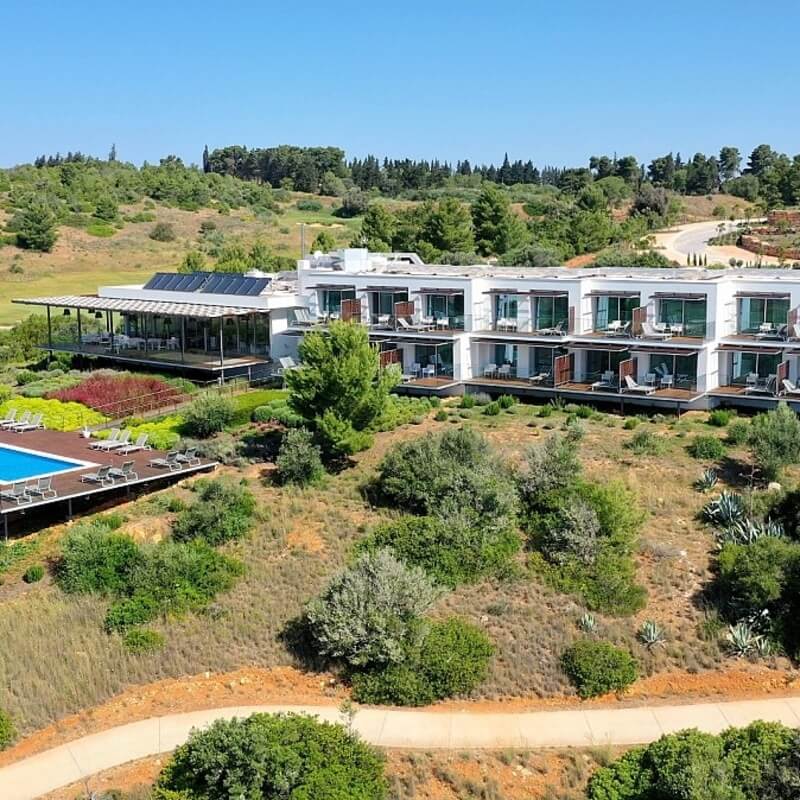 Palmares Beach House Hotel couples seeking adults-only tranquillity Booking.com Expedia
Last reviewed: